





Hi there! How can we help you today?
Why Most Business Websites Fail After Launch (And How to Avoid It)
-
Home
-
Website Maintenance & Security
-
Why Most Business Websites Fail After Launch (And How to Avoid It)

Why Most Business Websites Fail After Launch (And How to Avoid It)
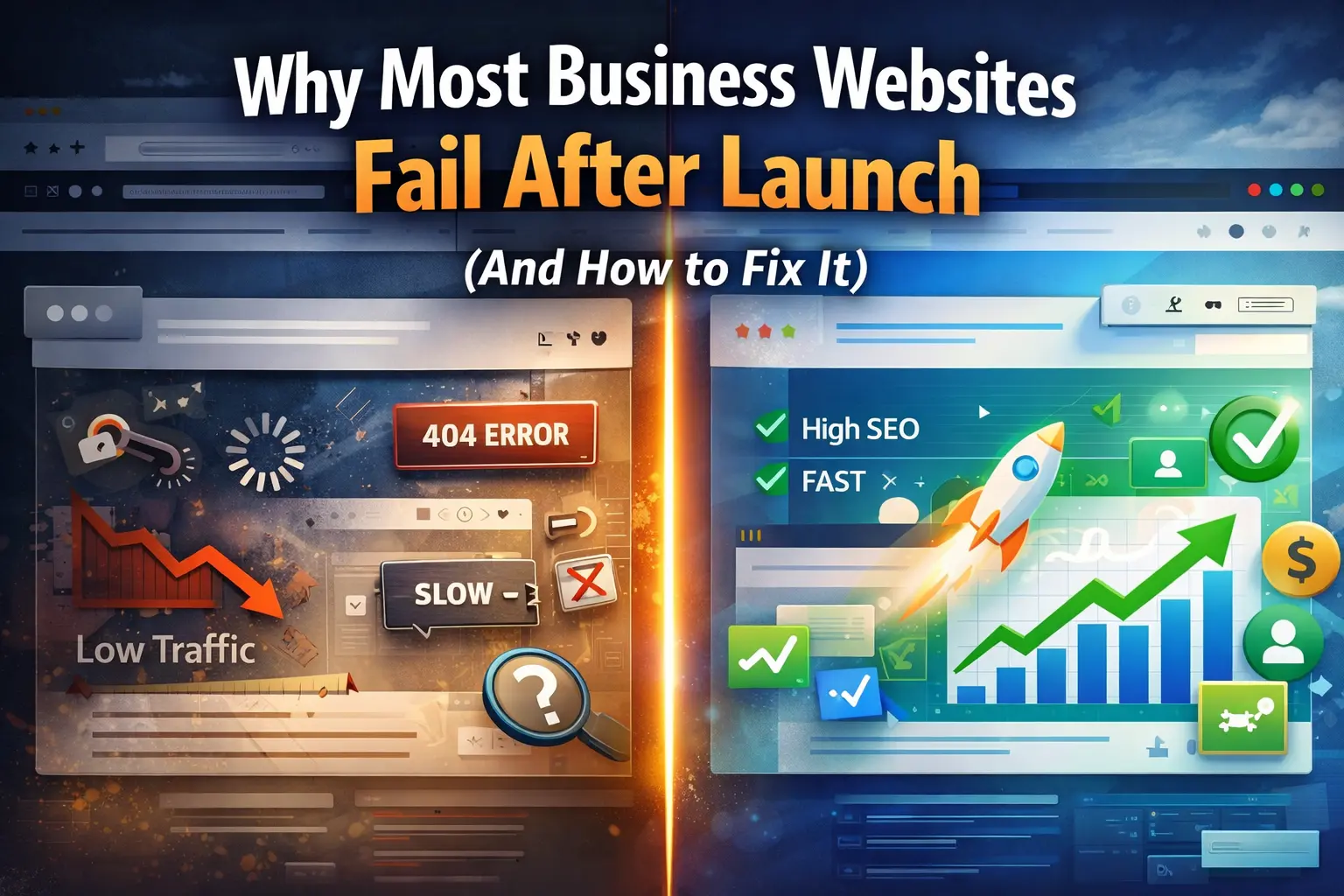
Launching a website feels like a milestone. You’ve made the pages, picked the design, added content — and finally it’s live! But for many businesses, the excitement fades fast. The site goes live… and nothing happens. Low traffic. No leads. No sales. Just silence.
Why Most Business Websites Fail After Launch (And How to Avoid It)
Your guide to making websites that don’t just launch — they work.
Launching a website feels like a milestone. You’ve made the pages, picked the design, added content — and finally it’s live! But for many businesses, the excitement fades fast. The site goes live… and nothing happens. Low traffic. No leads. No sales. Just silence.
So what’s really going on? And why do so many business sites fail after launch?
The truth is simple: launching a website is not the finish line — it’s day one of the real work.
1. Treating the Website Like a Digital Brochure
Many businesses think, “If it’s live, we’re done.” But a website is not a static brochure — it’s a digital storefront and sales engine. Websites that sit unchanged after launch soon drift out of alignment with both user expectations and search engines.
Without ongoing updates, content becomes outdated, performance drops, and your visitors leave for competitors.
2. No Clear Goals or Strategy
A website without a strategy is like a store without a sign: visitors enter and leave confused.
Who are you talking to?
What action should they take?
What value do you offer?
If these questions aren’t clearly answered, users click away — often within seconds.
3. Ignoring Performance and Speed
Your beautiful hero image might look amazing — but if it takes too long to load, people won’t wait.
Studies show users abandon slow pages fast, and search engines penalize lagging sites in rankings.
Performance isn’t a one-time fix. As you add features or content, sites can slow down unless you regularly optimize images, scripts, and hosting.
4. Static Content and SEO That Dies Fast
Content that felt relevant at launch can quickly become outdated as markets shift and customer needs evolve. Sites without regular SEO updates will gradually lose visibility in search engines — meaning less traffic, fewer leads, and declining growth.
Updating copy, refresh keywords, and adding fresh, useful content keeps a website relevant.
5. Lack of Lead Systems and Conversion Paths
Many sites have contact forms — but no strategy to capture, nurture, and follow up on leads.
Without clear calls to action and conversion paths, even traffic turning up to your site won’t turn into business.
6. Minimal Testing and User Feedback
Launching without real user testing is like selling a product without showing it to customers first. Usability issues — from confusing navigation to broken forms — can silently kill conversions.
Real testing uncovers hidden problems and creates opportunities for improvement.
In Summary: Why Websites Fail After Launch
They aren’t static documents — they’re living business assets.
If you treat your site as “done” once it’s launched, you’re setting yourself up for disappointment. Successful business websites are:
✅ Strategically planned
✅ Continuously updated
✅ Performance-optimized
✅ SEO-driven
✅ Built to convert — not just exist
Launch is just the beginning — the real growth starts when you treat your website as a dynamic, measurable, and evolving part of your business.
Share this post:
Related Posts

Web Development How to Use Microservices for Scalable Web Applications
Learn how to use microservices architecture to build scalable web applications. Discover benefits, i...

Web Development The Importance of Mobile Optimization for E-Commerce Websites
In today’s digital marketplace, mobile devices have become the primary way people browse and shop on...

Web Development How to Conduct a Website Design Audit for Better Performance
Learn how to conduct a website design audit to improve performance, user experience, and conversions...